Hydroponic Plants: The Most Underrated Stability Tool in Aquarium Keeping
A well-growing hydroponic plant can rival the impact of a high-end filtration system.
If stability is the foundation of freshwater aquarium success, hydroponic plants may be one of the most overlooked tools available to hobbyists.
How Hydroponic Plants Improve Water Quality
Hydroponic plants (plants with roots in water and leaves above the surface) actively absorb:
- Ammonia (NH₃/NH₄⁺)
- Nitrite (NO₂⁻)
- Nitrate (NO₃⁻)
- Dissolved organic compounds
Through nitrogen uptake and rapid root growth, these plants act as living nutrient export systems. Unlike submerged aquatic plants, emerged growth forms typically grow faster and consume nutrients more aggressively.
The result: improved water clarity, reduced algae pressure, and increased system stability — often with fewer water changes required.
Think of It as Mini Aquaponics
If you are familiar with aquaponics systems, you already understand the principle: fish waste feeds plants, and plants stabilize water.
The same concept applies on a smaller scale in aquariums — yet many hobbyists never consider applying it.
Root Systems Create Natural Structure
Submerged root systems provide:
- Natural cover for shrimp and fry
- Surface area for beneficial bacteria
- Micro-habitats for biofilm growth
- Improved fry survival rates
For shrimp tanks especially, dense root networks dramatically increase usable surface area.
Stress Reduction & Fish Health
Plants help stabilize nitrogen compounds and reduce fluctuations in water quality. Since stress is one of the most common triggers for fish disease, improved stability indirectly lowers health risks.
Additionally, plant roots release small amounts of beneficial organic compounds into the water column. While not a replacement for proper care, this biological buffering contributes to a more resilient system.
Real-World Examples
Example 1: Ranchu Goldfish System
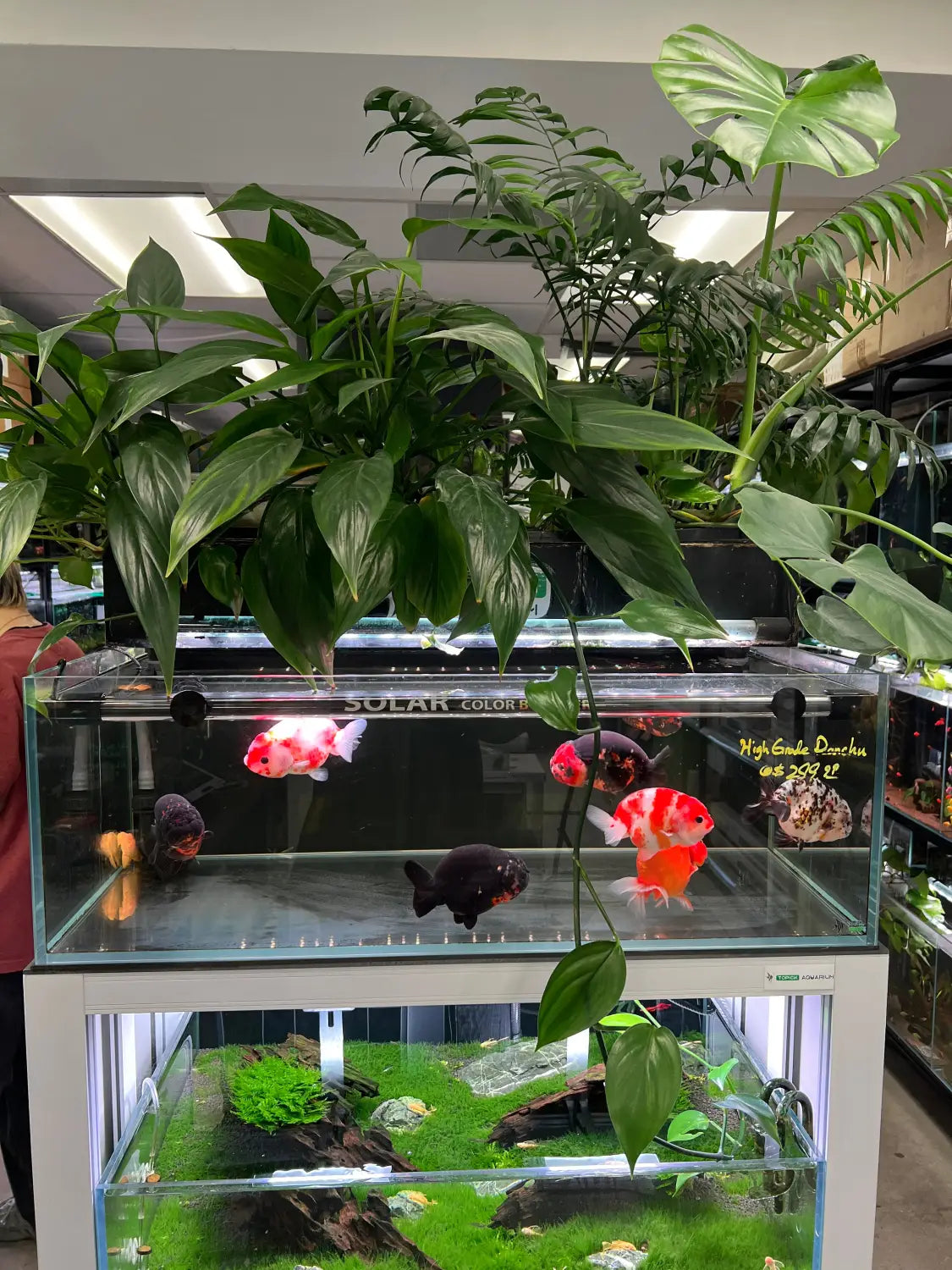
In our 30-gallon system housing 8–12 large Ranchu goldfish (around 6 inches), fed twice daily, water changes are required far less frequently than conventional stocking rules would suggest.
The key difference is the dense plant growth in the filtration chamber — including pothos, monstera, and other marsh-style plants. This “swamp-style” plant filtration dramatically increases nutrient export capacity.
Example 2: High-Density Neocaridina Tank
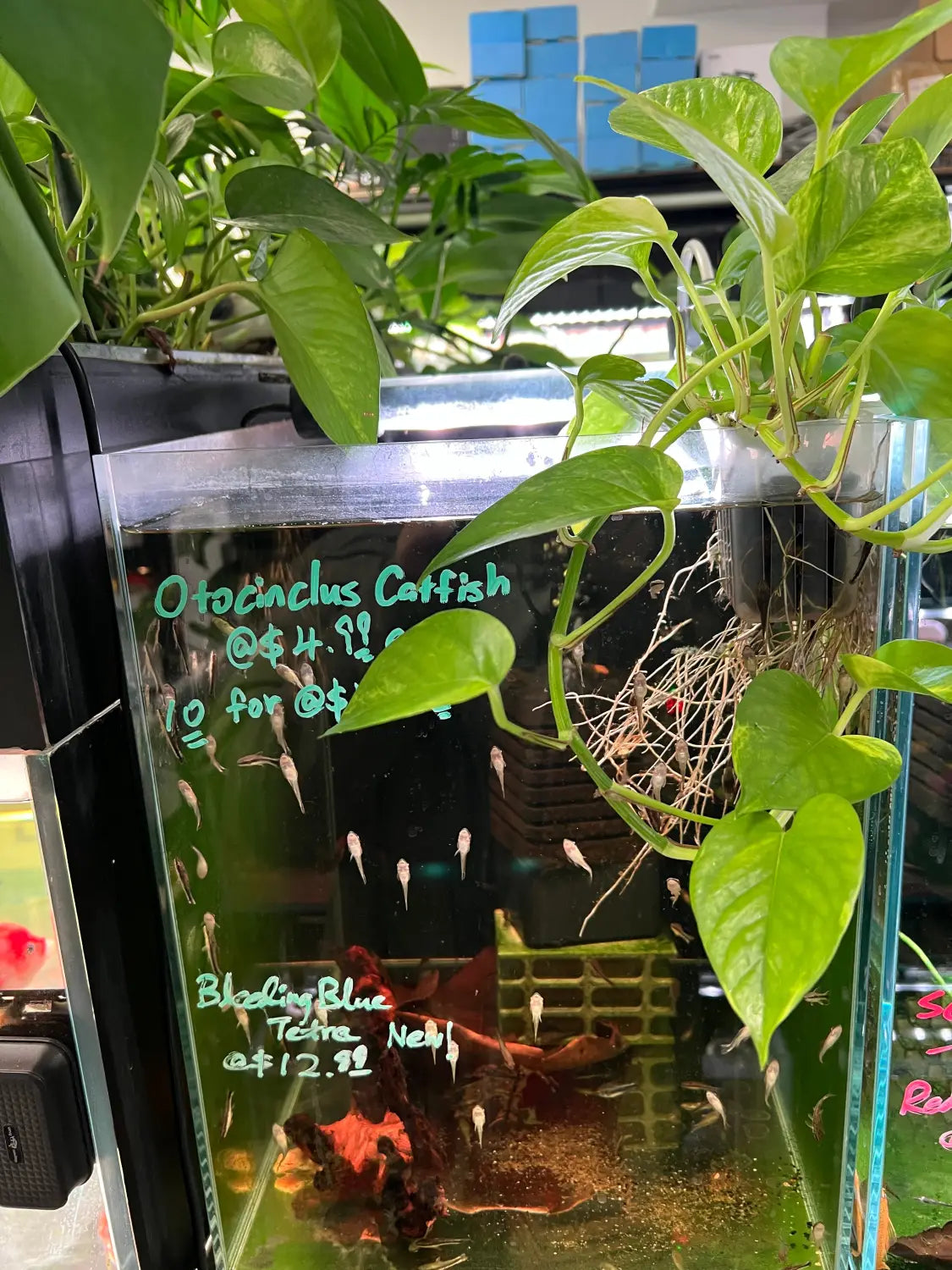
In a 10-gallon tank with over 200 adult shrimp, the addition of hydroponic pothos stabilized water parameters and increased root structure. Survival rates improved, and daily fluctuations became minimal.
The filtration used? A simple sponge filter.
How to Set Up Hydroponic Plants
For most houseplants:
- Keep roots submerged
- Keep leaves above water
- Secure with baskets, hooks, or simple holders
Within one week, root growth is typically visible.
Best Plants for Aquarium Hydroponics
- Pothos (Epipremnum aureum)
- Monstera species
- Peace lily (Spathiphyllum)
- Philodendron
- Lucky bamboo (Dracaena sanderiana)
- Sweet potato vines
- Garlic sprouting experiments
- Many Araceae family plants
Pothos remains the most reliable: low light requirement, rapid root growth, high adaptability.
Interestingly, full-spectrum aquarium lighting often outperforms many consumer “plant grow lights” when used above hydroponic setups.
Final Thought
Hydroponic plants are not magic — they are biology.
When used correctly, they become one of the most powerful, natural tools for freshwater aquarium stability.
Few upgrades combine aesthetics, nutrient control, biological support, and stress reduction as effectively.
Sometimes, the biggest shortcut in aquarium keeping is simply letting nature help you.