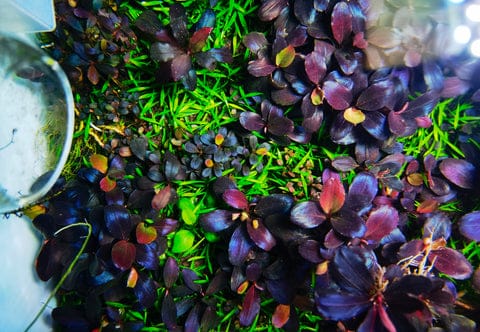
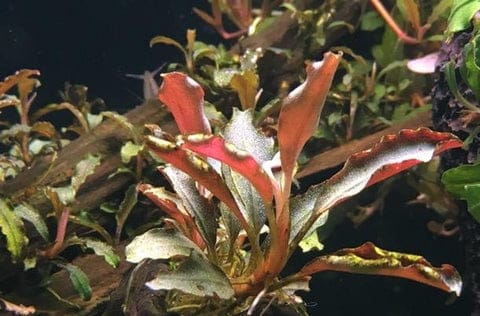
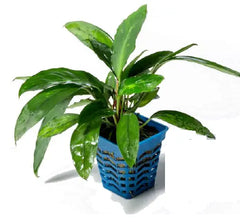
What is Bucephalandra?
Bucephalandra is one of the newer genus of aquatic/semi-aquatic aroids endemic(originating from) to the island of Borneo, which is governed by Thailand, Indonesia, Malaysia, and contains the small country of Brunei. Originally exported or introduced in the early 2011-2012, while only being fully documented and studied around 2015 onward(first documented by Schott, Heinrich Wilhelm 1858)
Of the 29-30 distinct species that can be differentiated based on their inflorescence structure (flower), location (variant), foliage shape and size. While some have taken it a bit further and sequenced their DNA.
Found throughout many different types of growing conditions, some species are more tolerable to submersed care while some are almost impossible if not outright incapable of being submersed for long term.
Generally speaking, majority of submersible variants and or species (offered commercially) will fall under:
- Bucephalandra pygmaea
- Bucephalandra tetana
- Bucephalandra diabolica
- Bucephalandra sordidula
- Bucephalandra belindae
- Bucephalandra micrantha
- Bucephalandra catherineae
The
pygmaea,
tetana,
diabolica and
sordidula are smaller species in physical size. The
belindae,
micrantha, and
catherineae are of the only 3 species to display an elongated leaf with ribbed edges.
What Separates Bucephalandra Species?
The majority of found Bucephalandra within the same location tends to hybridize through natural pollinators. This in turn causes the resulting hybrids to be very similar in appearance as their parents but with a different structure in their flower/inflorescence and physical structure all together.
Currently with what we know so far, the characteristics that separates (mainly physical appearance) Bucephalandra species are:
- Flower/inflorescences
- Leaf shape
- Physical size
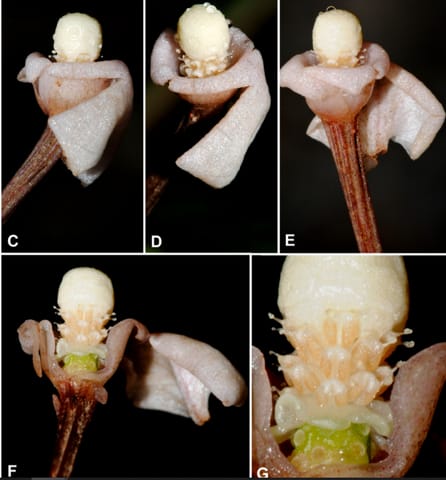
(Wong S. Y. & Boyce P. C.: Studies on Schismatoglottideae (Araceae) of Borneo XXX – New species and combinations for Bucephalandra – Willdenowia 44: 149–199. 2014)
Bucephalandra General Care
pH: 6.0 - 8.0
Light: Low - High
Co2: Strongly recommended but not necessary
Growth Rate: Slow
Care: Easy
GH: Any Levels
KH: Any Levels
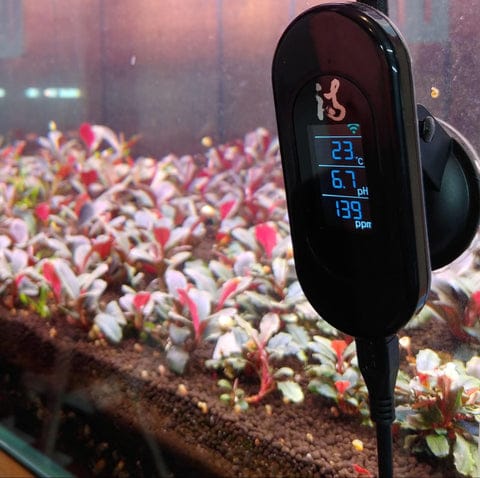
Depends on your growing purpose, you can:
- Attach Bucephalandra on top of the aqua soil for the fastest growth and the best color. In this case you could glue/tie Bucephalandra onto weights (ex. small rock pieces and ceramic rings), or, by using a more purposed tool of planting fork
- Put Bucephalandra in low-demanding tank like shrimp tank for ease of maintenance. This will minimize your growth rate, while still allowing for the possibility of growth with minimal algae growth.
- For aqua scaping purposes it is best to just use a dab of super glue onto a hardscape and press the rhizome onto the spot firmly but gently.
What are the Commonly Seen Bucephalandra?
The most commonly found Bucephalandra trading names on the market are:
- Wavy
- Kedagang
- Theia
- Phantom
- Helena
- Ghost
- Brownie
- Neo
- Pandora
- Jade
- Achilles
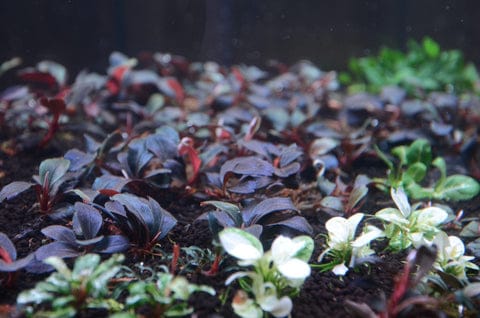
Sometimes you will also find regional/city types, such as:
- Nanga pinoh
- Sedakau
- Boyan
- Sintang
- Kaupas
- Sanggau
- Entikong
Why is Collector's Bucephalandra Expensive?
Rareness
Every year unidentified Bucephalandra are introduced from the wild to collectors, farms, researchers and exporters. However, only a handful of them that show good potentials reach the collecting level.
Rich Colors
The intensity of color you will see in your Bucephalandra depends solely on the genetics and its growing condition. Both must be in play. Most Bucephalandra will never color up, no matter the time spent submersed.
Expensive to grow
In order to show their rich colors, collector's Bucephalandra need strong lighting, rich CO2, and high-quality substrate to be submersedly grown. In addition, the skill requirements and cost on maintenance (ex. algae control due to strong lighting) for collector's Bucephalandra is much higher than normal Bucephalandra that can be grown emersedly.
Low Risk Transitioning
Also due to the fact of submersed growing, the collector's Bucephalandra have a much longer growing period and resulting the lowest risk of melting/dying when moving to your tank.
Comparing Potted, Tissue Culture and Submersed Bucephalandra
Potted Farm Products
Pros:
- It’s commercially regulated, has standard sizes and portions
- Usually free of algae and snails, except when it is mishandled by the sellers
- Easier to transport and store
- Supports local farms and reduces illegal poaching in their countries of origins
Cons:
- Risk of leaves curved, holes, even melting during the transition from emersed to submersed
- Transition period generally last for 3 - 8 months
- The options for color are very limited
Tissue Cultures
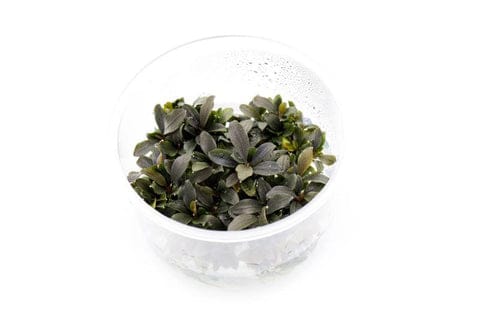
Pros:
- It’s commercially regulated, has standard sizes and cups
- 100% free of algae and snails
- Easier transition from emersed to submersed with comparing to potted products
- Light in weight thus cost less for shipping
- Has more plants within a cup, cost per plant is the lowest
Cons:
- Delicate, susceptible to pathogens and pests.
-
Must be kept closed until planting, also shorter shelf life.
- The options for color are very limited
Submersed Products
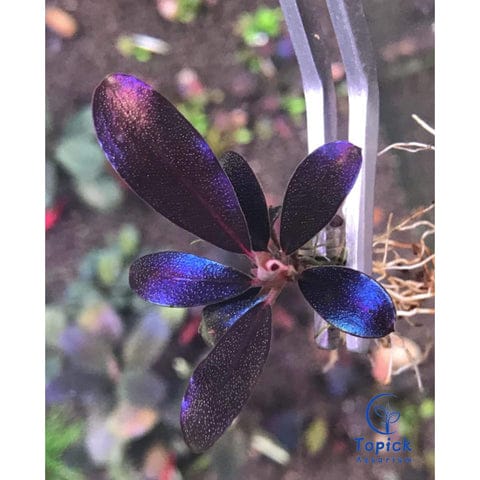
Pros:
- No need to risk transitioning, can adapt much quicker as long as the plant is healthy
- So far the deep vibrant colors species are only available in submersed options
Cons:
- The highest cost per plant
- Risk of algae and snails from unprofessional sellers/owners
- Difficult to standardize sizes and portions
- The shortest shelf time and the highest requirement for the packaging of shipping
Myths and Important Facts about Bucephalandra
#1 Myth: Bucephalandra is a low demanding plant
Yes and no. While some Bucephalandra species have been proven to be an adaptive plant that can be kept under weak lighting, minimum nutrients, and without any CO2 injection. This is not always the case when it comes to more vibrant colors Bucephalandra.
For the Bucephalandra with green leaves, their transition to submersed is rather easy with minimal vegetative loss; However their color improvement over time is very limited, at least visually speaking.
However, the Bucephalandra with deep vibrant colors are actually more high-demanding. Their necessity for longer lighting, and higher nutrient requirements(including macros and micros), and Co2 are even higher than stem plants in most cases. If both or one is insufficient and unbalanced, this has the possibility for them to revert back to their green coloration and can likely cause algae and rhizome rotting.
When planting into new conditions, it is best to trim some of the older roots attached to the main rhizome. This can promote more new and healthy growth that is more suited for its new tank condition.
#2 Myth: Bucephalandra can not be grown in the aqua soil
When you see a similar description show up, you can always tell that the author/owner doesn’t really know much about the plant they are selling or hasn’t tested theories before making a conclusion.
Oftentimes you will see that the majority of articles, and blogs are carbon copies of those who know a bit more. Ironically, planting Bucephalandra in aqua soil is so far one of the better ways for growing them: they are rheophytic, their strong root system helps them not only to anchor but also extract nutrients from the soils. Growing Bucephalandra in the aqua soil is not as easy as stem plants and there is still much to learn, for those who want to grow them in aqua soil, you will need to understand some techniques and tools in order to be successful in growing them in this way.
Not all soils are equal, not all substrates are equal. How you build your substrate, changes how plants will react and grow.
#3 Myth: Don’t oxygenized the planted aquarium with CO2 injection
(good for Bucephalandra because their origin has, also good for animals inside the tank, would not deduct a lot CO2, use air diffuser )
A common myth that is not entirely a myth is that you should not oxygenate your water with a bubbler or air pump, if you are injecting CO2. While true in some regards, this also causes more issues for some plants as they are transitioning from immersed to submersed. Without oxygen or more so, without a proper balance of dissolved oxygen while in use with CO2, at least when it comes to transitioning, it can cause a lot of melting of the immersed leaves as you are transitioning to fully submersed.
#4 Fact: All the potted and not-indicated Bucephalandra products are emersed
Even though you see the potted Bucephalandra housed inside a tank that is filled up with water, it doesn’t mean they are always grown submersed. Instead, it is just a method for storing them. True submersed grown portions will unlikely if not never be available as potted.
In fact, the reason submersed Bucephalandra are higher in value is that they take the same amount of care it takes to grow faster plants, however due to their slow growth, it is unrealistic to assume that stores would hide this feature of the product from customers. Also, it is sometimes not worth it for the stores to use extra labor and materials to put the submersed Bucephalandra into pots that look like an emersed product.
Again, telling this fact is not intended to make any kind of recommendations for buying, we have discussed the pros and cons in the previous section and this is just one thing that every bucephalandra hobbyist should know.
(Keep updating...)
Definitions
Emersed: meaning emerging out of water.
Immersed: means to grow while underwater placed in water (it is hard to tell emersed from immersed, most worry only about emersed and submersed).
Submersed: meaning grown 100% underwater.